If you are buying fingerprint ink pads one at a time from a local supplier, almost any pad will do. The moment you are buying by the case — for a booking desk, an enrolment centre, a mobile unit or a resale catalogue — the differences between pads start to cost real money. Here is what to compare before you commit to a supplier.
Start with the pad size your workflow actually needs
The two common formats exist for a reason.
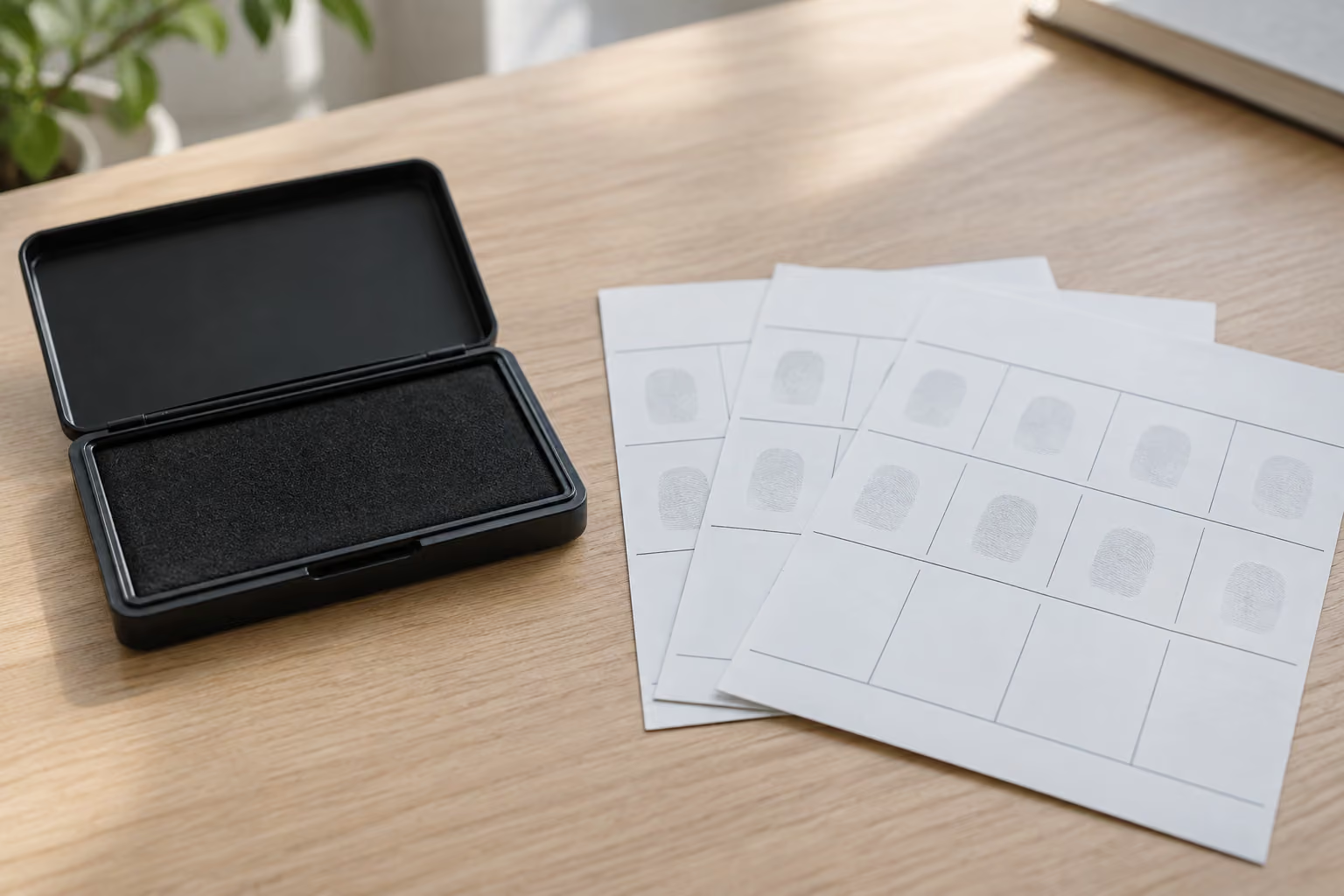
A full-size rectangular pad (around 6 inches / 157 mm wide) lets an operator take a complete ten-print set without repositioning the card. That matters at high-traffic desks, where the extra seconds per person add up over a shift.
A compact round pad (around 1.55 inches / 39 mm) is sized for rolling individual prints. It is the right choice for mobile kits, field units and enrolment drives where you are working one finger at a time and packing light.
Buying a large pad for a job that only needs one finger wastes ink and space. Buying a small pad for a ten-print station creates a bottleneck at exactly the wrong moment.
Impression rating is the number that decides your cost per print
A pad rated for 10,000+ impressions is not marketing language — it is the number that determines how often you reorder. Compare pads on that basis rather than on unit price alone, and you get the real cost per impression.
Ask a supplier two questions directly:
- What is the impression rating per pad under normal use?
- Does the pad require re-inking, and if so, at what interval?
If the answer to the second question is anything other than “it does not need re-inking,” add re-inking labour to your cost model. At volume, that labour usually costs more than the pads.
Ink dry-down and legibility
Fast-dry ink matters more than it sounds. A pad that stays wet on the finger smudges the card, and a smudged card has to be retaken — which costs an operator far more time than the pad itself.
Look for ink that:
- sets quickly on standard fingerprint cards,
- produces high-contrast ridge detail that survives scanning,
- does not bleed into the paper over time in storage.
If you archive cards for years, ask your supplier for a sample and test a few impressions under your own scanning equipment before placing a bulk order.
Safety and removability
For any pad used on skin, the ink should be non-toxic and skin-safe, and it should come off fingers with ordinary soap and water. This is not only a compliance point — it is an operational one. Ink that is hard to remove slows down every person who uses the pad.
Case design is not a detail
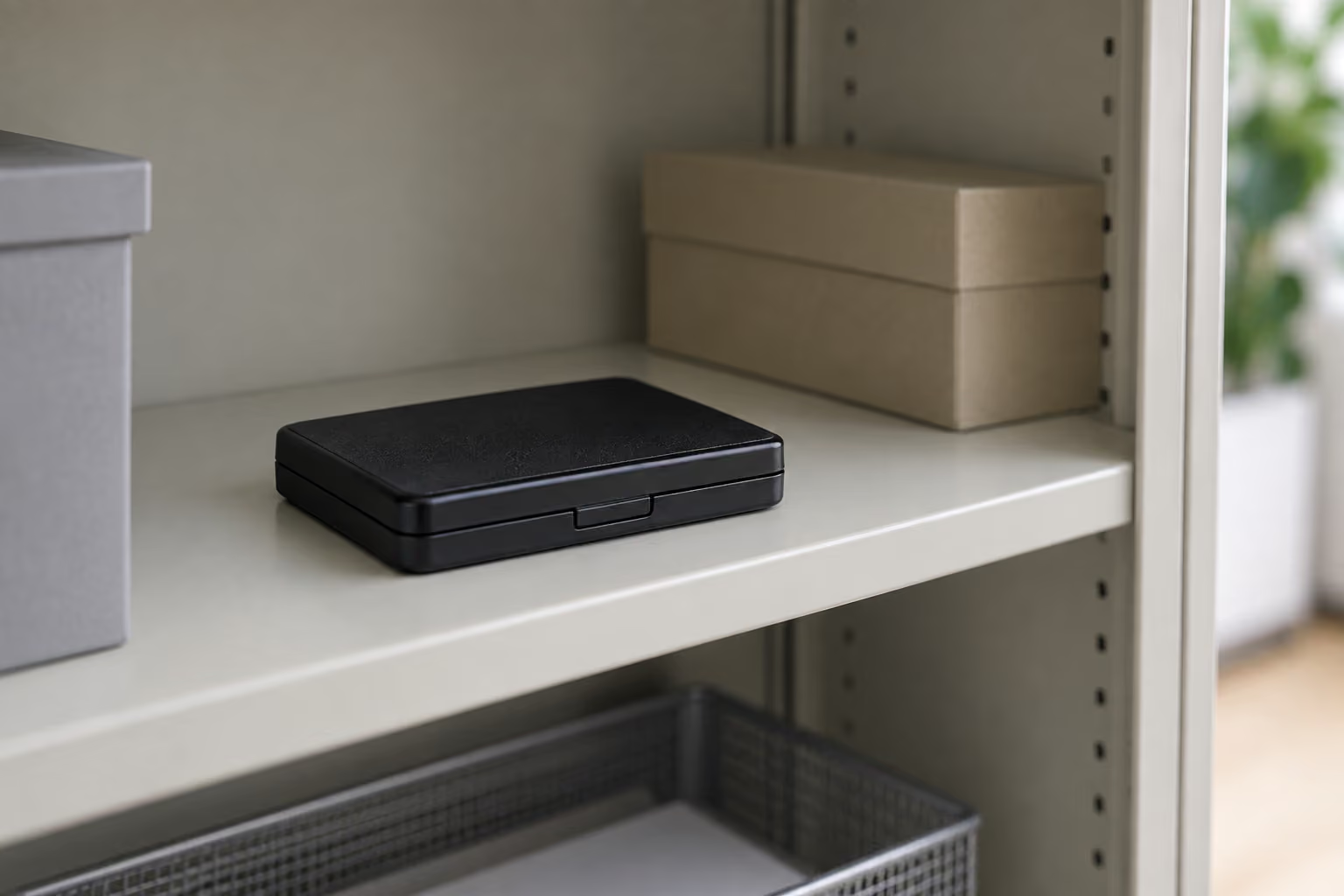
A sealed, snap-shut case is what keeps a pad usable between sessions. Without it, ink dries out, the pad picks up dust, and your effective impression rating drops. For field kits, the case also keeps ink away from other equipment in the bag.
A short checklist before you buy
- Format and size matched to the workflow (ten-print station vs. single-finger rolling).
- Impression rating of 10,000+ per pad, with no re-inking required.
- Fast-dry, high-contrast ink tested under your own scanner.
- Non-toxic, skin-safe formulation that washes off with soap and water.
- Sealed case that protects the ink surface in transport and storage.
- A supplier who can produce samples before you commit to a wholesale volume.
If you are evaluating suppliers for a bulk order, our wholesale programs cover bulk, OEM and private-label supply — and we are happy to send samples so you can run your own tests first.