Buying ink pads at wholesale is less about finding the lowest unit price and more about specifying the order well enough that the first shipment is the one you wanted. This guide covers what to decide before you approach a supplier.
Decide which of the three buying models fits you
Most wholesale relationships fall into one of three shapes. Knowing which one you need changes everything downstream — pricing structure, packaging, lead time and paperwork.
Bulk wholesale. You resell the product as-is. You care about landed cost, consistent specification between batches, and reorder lead times you can plan around.
OEM / ODM and private label. You sell under your own brand. You need custom packaging at minimum, and possibly a specified ink colour, pad size or case finish. This involves artwork approval, sample rounds and usually a higher minimum order quantity.
Distribution and institutional supply. You supply a region, a tender or a multi-site organisation. You care about forecast-based supply agreements, batch documentation and a single account contact.
Work out your real annual volume
Suppliers price on volume, so come with a number. Estimate it from usage rather than from last year’s purchase order:
- number of pads in service at each site,
- average replacement interval,
- expected growth over the next 12 months.
If you are reselling, use your realistic sell-through rather than your best-case forecast. An inflated first order either sits in your warehouse or forces an awkward conversation later.
Specify the product, not just the name
A wholesale quote is only comparable to another quote if the specification matches. Put these on the table explicitly:
- Format and size — full-size rectangular or compact round.
- Impression rating — the number of impressions per pad.
- Ink colour and formulation — including any non-toxic / skin-safe requirement.
- Case type — sealed, snap-shut, retail-ready or bulk-packed.
- Packaging — retail box, blister, poly bag or plain carton.
- Carton configuration — units per carton, cartons per pallet, mixed-SKU options.
Ask for samples before you commit
Never place a first bulk order without a physical sample. Ask for:
- A production-representative pad, not a hand-made prototype.
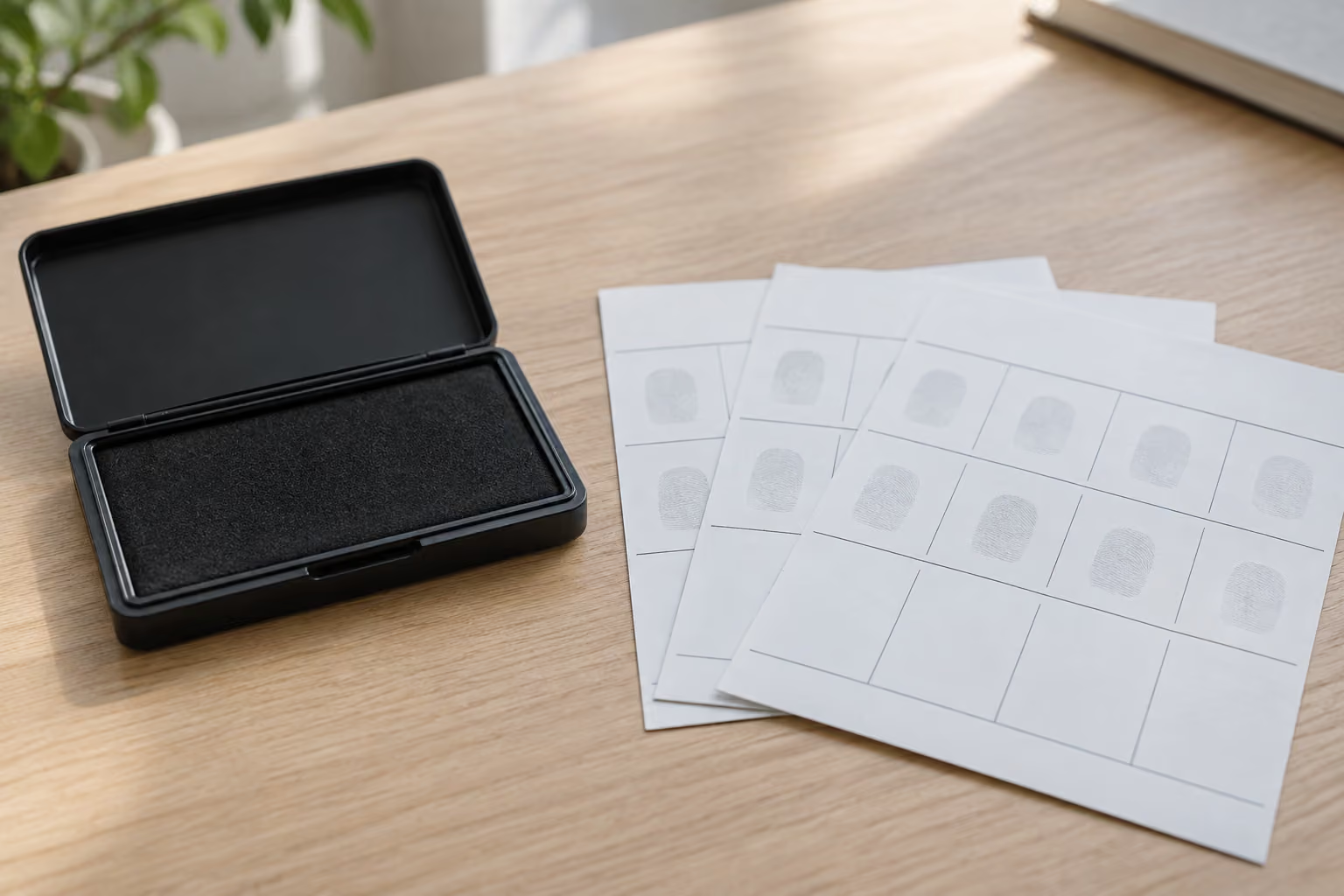
- A printed card taken with that pad, so you can judge contrast.
- Your proposed packaging, if you are ordering private label.
Test the sample with your own equipment — your scanner, your cards, your procedures. A pad that looks good in a brochure can behave differently under a real scanner.
Agree the commercial terms in writing
Before the order is confirmed, get these in writing:
- MOQ per SKU, and whether it differs for private label.
- Unit price and volume tiers, with the tier boundaries.
- Incoterms — who pays freight, insurance and duties, and where risk transfers.
- Lead time from order confirmation and from artwork approval.
- Payment terms and the deposit percentage.
- Batch consistency commitment — what the supplier promises about batch-to-batch variation.
Plan for the paperwork
Institutional and tender buyers usually need more than a box of pads. Ask early about:
- batch or lot documentation and traceability records,
- material safety documentation for the ink,
- certificates relevant to your market,
- ability to invoice under a specific legal entity or contract.
Getting these at the quotation stage avoids a scramble once the tender is awarded.
What to put in your first enquiry
A good first message to a supplier is short and specific. Include:
- target quantity (annual and first order),
- destination market and shipping port or city,
- required specification (size, ink, case, packaging),
- whether you need OEM / private label,
- your timeline.
That is enough for a supplier to quote properly instead of sending a generic price list.
If you are sourcing fingerprint ink pads at volume, our wholesale programs cover bulk, OEM/private-label and distribution supply. Send us your target volume, market and timeline through the contact form and we will come back with a quote and a sample plan.